
OSD line planning
How To Design an OSD Powder Processing Line
A practical guide to planning OSD powder processing lines for dispensing, transfer, milling, sieving, blending, granulation, drying and final feed.
Short Answer
An OSD powder processing line should be designed around batch flow, room layout, powder behavior, containment level, cleaning method and interfaces from dispensing through final feed.
Process diagram
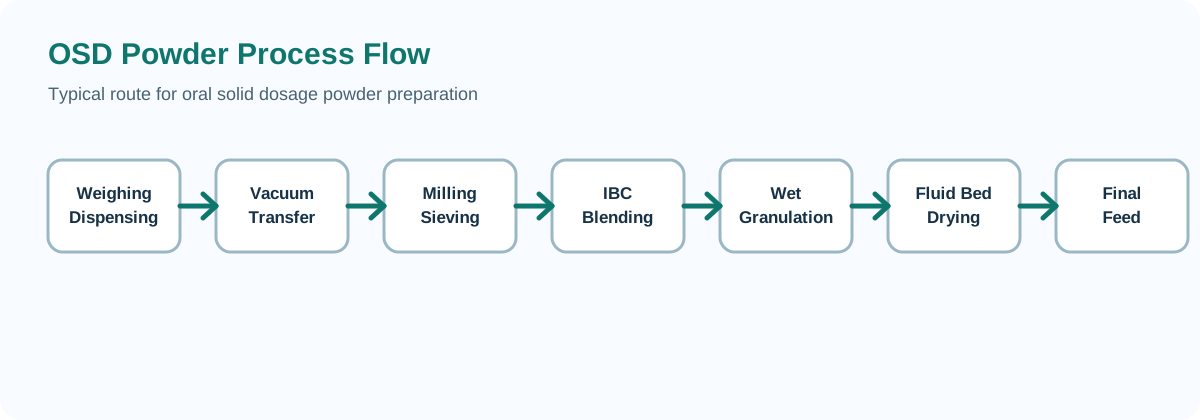
OSD Powder Process Flow
A simplified visual route from weighing and transfer through milling, blending, granulation, drying and final feed.
Practical explanation
How To Think About This Decision
Use the guide as an engineering checklist before preparing a URS, layout review or quotation request.
Start with the product route: dispensing, transfer, milling or sieving, blending, granulation, drying, final sizing and feed to compression, encapsulation or packing.
Then define the room sequence and transfer method. The line may use IBC movement, vacuum conveying, gravity discharge or hybrid routes depending on building layout and batch size.
Design decisions should be confirmed against cleaning access, dust release points, weighing accuracy, batch traceability and documentation expectations.
Process Application And Equipment Involved
Process Application
- Direct compression powder preparation
- Wet granulation and drying lines
- Final blend and IBC feed to tablet press or capsule filler
- Pilot scale-up and commercial OSD production
Equipment Involved
- GMP weighing booth
- Vacuum conveyor
- Vibro sifter
- Cone mill
- IBC bin blender
- High shear mixer granulator
- Fluid bed dryer
Quotation input
What Information Is Needed For Quotation
A clear inquiry lets the engineering team review process step, powder behavior, capacity, containment level and layout constraints before proposing an equipment scope.
Powder name, bulk density, particle size range, flowability and moisture sensitivity.
Required batch size or hourly capacity, transfer distance, elevation and number of bends.
Target process step, upstream equipment, downstream equipment and room layout constraints.
Containment, dust extraction, cleanroom, cleaning and material contact expectations.
Preferred automation level, documentation support and FAT/SAT/IQ/OQ support needs if required.
Internal links
Relevant Solutions And Equipment
Continue from this guide to the related solution and equipment pages for process position, applications, technical options and RFQ inputs.
RFQ
Send Project Details For Engineering Review
Send your URS, layout, BOQ, powder characteristics or required capacity. Our engineer will review the process step and suggest suitable powder handling equipment or a complete processing line concept.
Request A Proposal Based On This Guide
Send your URS, layout, BOQ, powder characteristics or required capacity. Our engineer will review the process step and suggest suitable powder handling equipment or a complete processing line concept.
FAQ
Frequently Asked Questions
Should an OSD line always include wet granulation?+
No. Direct compression, dry blend and wet granulation workflows require different equipment scopes.
What determines line capacity?+
Capacity depends on batch size, transfer rate, equipment working volume, cleaning time, drying time and room logistics.
Can a line concept be prepared before final URS approval?+
Yes. A preliminary line concept can be prepared with assumptions and refined after the URS, layout and equipment interfaces are confirmed.