
Transfer method comparison
Vacuum Conveyor vs Pneumatic Conveyor
Compare vacuum conveyors and pneumatic conveying approaches for pharmaceutical powder transfer, containment, layout, capacity and quotation planning.
Short Answer
Vacuum conveying is commonly selected for enclosed pharmaceutical powder transfer over practical plant distances, while broader pneumatic conveying choices depend on capacity, route, powder behavior and containment needs.
Practical explanation
How To Think About This Decision
Use the guide as an engineering checklist before preparing a URS, layout review or quotation request.
Vacuum conveyors pull powder from a pickup point to a receiver, then discharge it into downstream equipment. This can be useful for feeding sifters, mills, blenders, granulators or IBCs.
Pneumatic conveying is a wider category that may include vacuum or pressure systems. Selection depends on whether the powder should be pulled, pushed, transferred gently or moved at higher rates.
For pharmaceutical applications, the review should focus on dust control, filter cleaning, receiver design, discharge valve, route length and cleanability.
Process Application And Equipment Involved
Process Application
- Bag dump to sifter or mill transfer
- Weighing room to process room transfer
- IBC discharge to downstream equipment
- Contained charging of blender, granulator or dryer feed points
Equipment Involved
- Pharmaceutical vacuum conveyor
- Dust-free bag dumping station
- Pickup hopper
- Receiver and filter module
- Discharge valve and flexible connectors
Quotation input
What Information Is Needed For Quotation
A clear inquiry lets the engineering team review process step, powder behavior, capacity, containment level and layout constraints before proposing an equipment scope.
Powder name, bulk density, particle size range, flowability and moisture sensitivity.
Required batch size or hourly capacity, transfer distance, elevation and number of bends.
Target process step, upstream equipment, downstream equipment and room layout constraints.
Containment, dust extraction, cleanroom, cleaning and material contact expectations.
Preferred automation level, documentation support and FAT/SAT/IQ/OQ support needs if required.
Internal links
Relevant Solutions And Equipment
Continue from this guide to the related solution and equipment pages for process position, applications, technical options and RFQ inputs.
RFQ
Send Project Details For Engineering Review
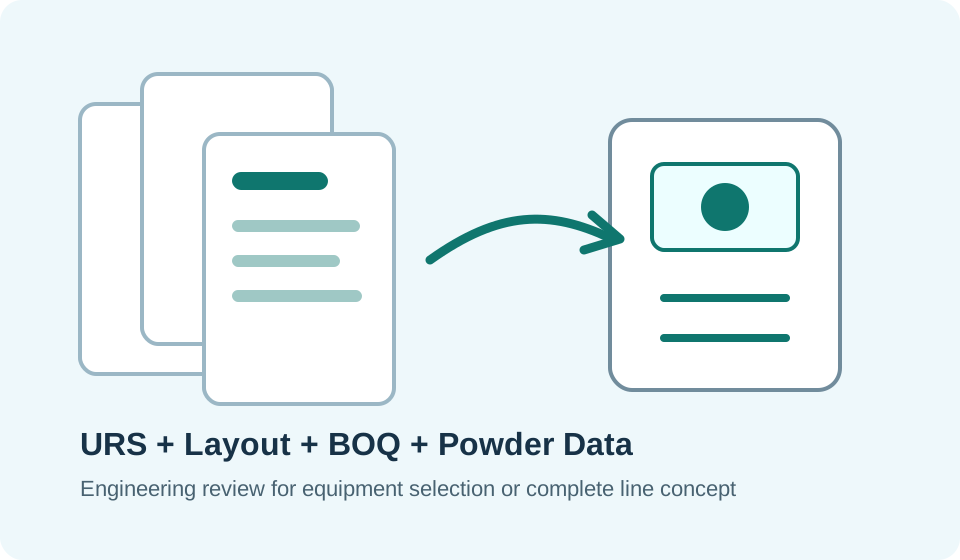
Send your URS, layout, BOQ, powder characteristics or required capacity. Our engineer will review the process step and suggest suitable powder handling equipment or a complete processing line concept.
Request A Proposal Based On This Guide
Send your URS, layout, BOQ, powder characteristics or required capacity. Our engineer will review the process step and suggest suitable powder handling equipment or a complete processing line concept.
FAQ
Frequently Asked Questions
Is vacuum conveying suitable for every powder?+
No. Very sticky, fragile, segregating or poor-flowing powders need careful testing or conservative route selection.
What affects transfer capacity?+
Bulk density, line length, vertical lift, bends, receiver size, filter area, vacuum source and discharge cycle all affect capacity.
Can vacuum conveying connect to a bag dumping station?+
Yes. Bag dumping stations often include a pickup hopper or transfer adapter for downstream vacuum conveying.