
Wet granulation and drying process integration
Granulation & Drying Line
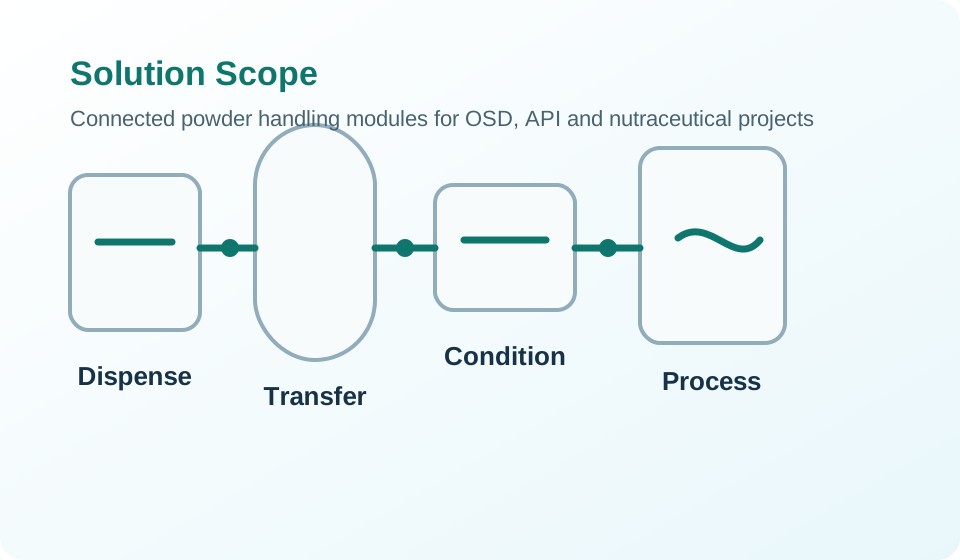
Granulation and drying line solutions with high shear mixer granulator, fluid bed dryer, milling, sieving, transfer and discharge integration.
Short Answer
A granulation and drying line combines high shear mixing, wet granulation, fluid bed drying, discharge, milling, sieving and transfer into an OSD powder processing workflow.
Process position
Process Position
This line occupies the wet granulation core of an OSD process, linking powder charging to wet massing, drying, sizing and downstream blend preparation.
Step 1
Dry powder charging
Step 2
Binder addition
Step 3
Wet granulation
Step 4
Fluid bed drying
Step 5
Sizing
Step 6
Discharge
Engineering review
Send Project Details For Equipment Or Line Selection
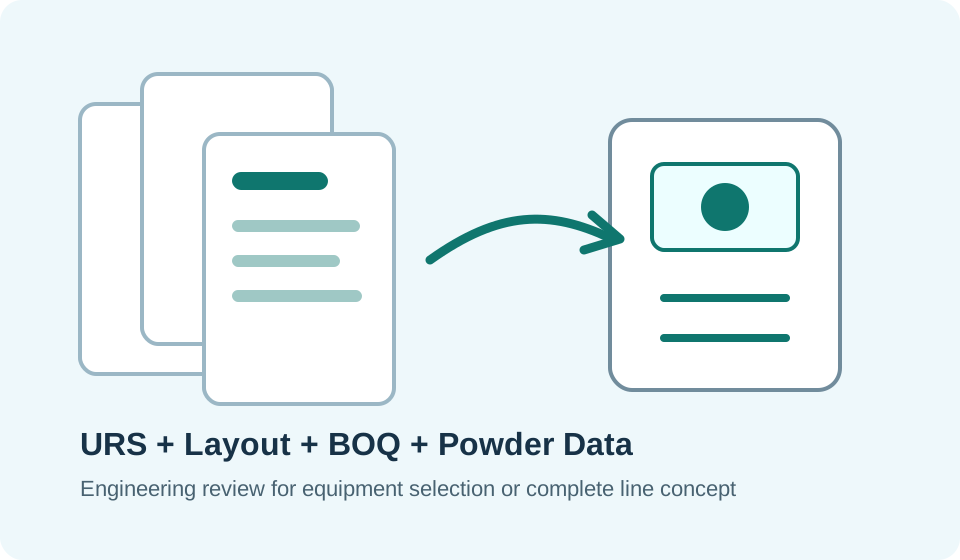
Send your URS, layout, BOQ, powder characteristics or required capacity. Our engineer will review the process step and suggest suitable powder handling equipment or a complete processing line concept.
Send Project Details For Engineering Review
Send your URS, layout, BOQ, powder characteristics or required capacity. Our engineer will review the process step and suggest suitable powder handling equipment or a complete processing line concept.
Applications, Benefits And Technical Options
Applications
- Tablet granule preparation
- Capsule granule production
- Pilot and commercial wet granulation
- Moisture-controlled drying processes
- Granule sizing before final blending
Key Benefits
- Integrated workflow from granulation to dried granule discharge
- Transfer and discharge routes planned around room layout
- Drying and milling interfaces considered early
- Control and documentation options can be scoped with the line
- Supports pilot, scale-up and production capacity discussions
Technical Options
- High shear mixer granulator with binder addition system
- Fluid bed dryer with inlet air handling options
- Wet mill, dry mill or post-dryer cone mill
- Vacuum transfer, IBC discharge and sifter integration
- Recipe controls, process sensors and batch reporting options
Quotation input
What Information Is Needed For Quotation
A clearer URS and layout package helps the engineering team confirm equipment scope, capacity assumptions, containment expectations and documentation needs.
Product name, powder properties, bulk density, particle size range and flowability notes.
Required capacity per batch or per hour, target transfer distance and elevation.
Process layout, room classification expectations and upstream/downstream equipment interfaces.
Containment, dust extraction, cleaning, material contact and documentation expectations.
Utilities, control preference, automation scope and FAT/SAT/IQ/OQ support requirements.
Ready To Discuss A Powder Handling Project?
Send your URS, layout, BOQ, powder characteristics or required capacity. Our engineer will review the process step and suggest suitable powder handling equipment or a complete processing line concept.
FAQ
Frequently Asked Questions
What defines granulation line capacity?+
Capacity depends on batch size, wet massing time, drying time, transfer method, cleaning cycle and the number of batches required per shift.
Can milling be included before and after drying?+
Yes. Wet milling before drying and dry milling or sieving after drying can be configured according to granule size targets.
Is documentation support available for pharmaceutical projects?+
Documentation support can be included according to project scope, including drawings, material certificates, FAT/SAT records and IQ/OQ support if required.
Related guides
Related Guides
Use these Knowledge Hub articles to compare equipment options, prepare RFQ inputs and connect this page to the wider powder handling process.
How To Design an OSD Powder Processing Line
An OSD powder processing line should be designed around batch flow, room layout, powder behavior, containment level, cleaning method and interfaces from dispensing through final feed.
Read guideWhat Is Pharmaceutical Powder Handling Equipment?
Pharmaceutical powder handling equipment moves, conditions, weighs, contains and feeds powders between process steps while supporting dust control, cleanability, operator workflow and GMP-oriented documentation.
Read guideVacuum Conveyor vs Pneumatic Conveyor
Vacuum conveying is commonly selected for enclosed pharmaceutical powder transfer over practical plant distances, while broader pneumatic conveying choices depend on capacity, route, powder behavior and containment needs.
Read guide