
Containment planning
API Powder Containment System Guide
Guide to API powder containment systems for closed transfer, charging, dispensing, operator protection, cleaning and RFQ planning.
Short Answer
An API powder containment system reduces open handling at high-risk powder transfer points by using selected closed transfer, extraction, docking, weighing or isolation features.
Process diagram
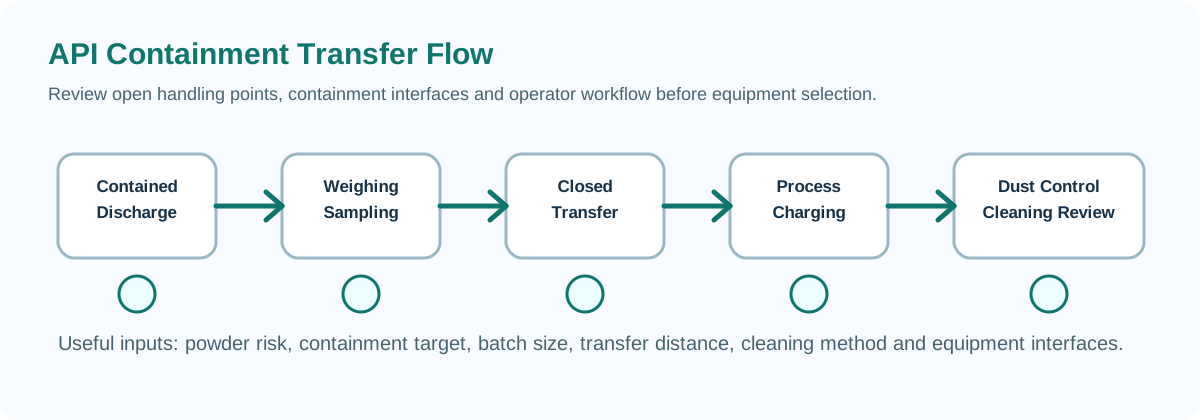
API Containment Transfer Flow
A containment-oriented view of discharge, weighing, closed transfer, charging and dust control review points.
Practical explanation
How To Think About This Decision
Use the guide as an engineering checklist before preparing a URS, layout review or quotation request.
Containment planning starts with identifying where powder is exposed: bag opening, dispensing, charging, discharge, sampling, milling or cleaning.
The equipment choice depends on product risk, containment target, batch size, operator access, cleaning method and the upstream or downstream equipment interface.
The concept may combine weighing booths, split valves, vacuum transfer, contained bag dumping, isolator interfaces and closed discharge arrangements.
Process Application And Equipment Involved
Process Application
- API dispensing and sampling
- Contained transfer to reactor, blender or granulator
- Dust-sensitive material charging
- Operator protection upgrades around existing rooms
Equipment Involved
- API transfer and containment system
- GMP weighing booth
- Vacuum conveyor
- Split valve or containment valve
- Contained bag or drum discharge station
Quotation input
What Information Is Needed For Quotation
A clear inquiry lets the engineering team review process step, powder behavior, capacity, containment level and layout constraints before proposing an equipment scope.
Powder name, bulk density, particle size range, flowability and moisture sensitivity.
Required batch size or hourly capacity, transfer distance, elevation and number of bends.
Target process step, upstream equipment, downstream equipment and room layout constraints.
Containment, dust extraction, cleanroom, cleaning and material contact expectations.
Preferred automation level, documentation support and FAT/SAT/IQ/OQ support needs if required.
Internal links
Relevant Solutions And Equipment
Continue from this guide to the related solution and equipment pages for process position, applications, technical options and RFQ inputs.
RFQ
Send Project Details For Engineering Review
Send your URS, layout, BOQ, powder characteristics or required capacity. Our engineer will review the process step and suggest suitable powder handling equipment or a complete processing line concept.
Request A Proposal Based On This Guide
Send your URS, layout, BOQ, powder characteristics or required capacity. Our engineer will review the process step and suggest suitable powder handling equipment or a complete processing line concept.
FAQ
Frequently Asked Questions
What information is needed for containment review?+
Powder risk, OEL or internal exposure target if available, batch size, transfer points, cleaning method and operator workflow are important.
Can containment be added to existing equipment?+
Sometimes. Existing nozzles, heights, cleaning access and room layout must be reviewed before a retrofit concept is proposed.
Does containment always require an isolator?+
No. The required approach depends on risk assessment. Some applications use closed transfer, local extraction or split valves instead.