
Controlled delumping and granule sizing
Conical Mill for Controlled Delumping and Powder Sizing
A screen-based conical mill for controlled delumping, granule calibration and OSD powder sizing where a more controlled treatment than high impact milling is preferred.
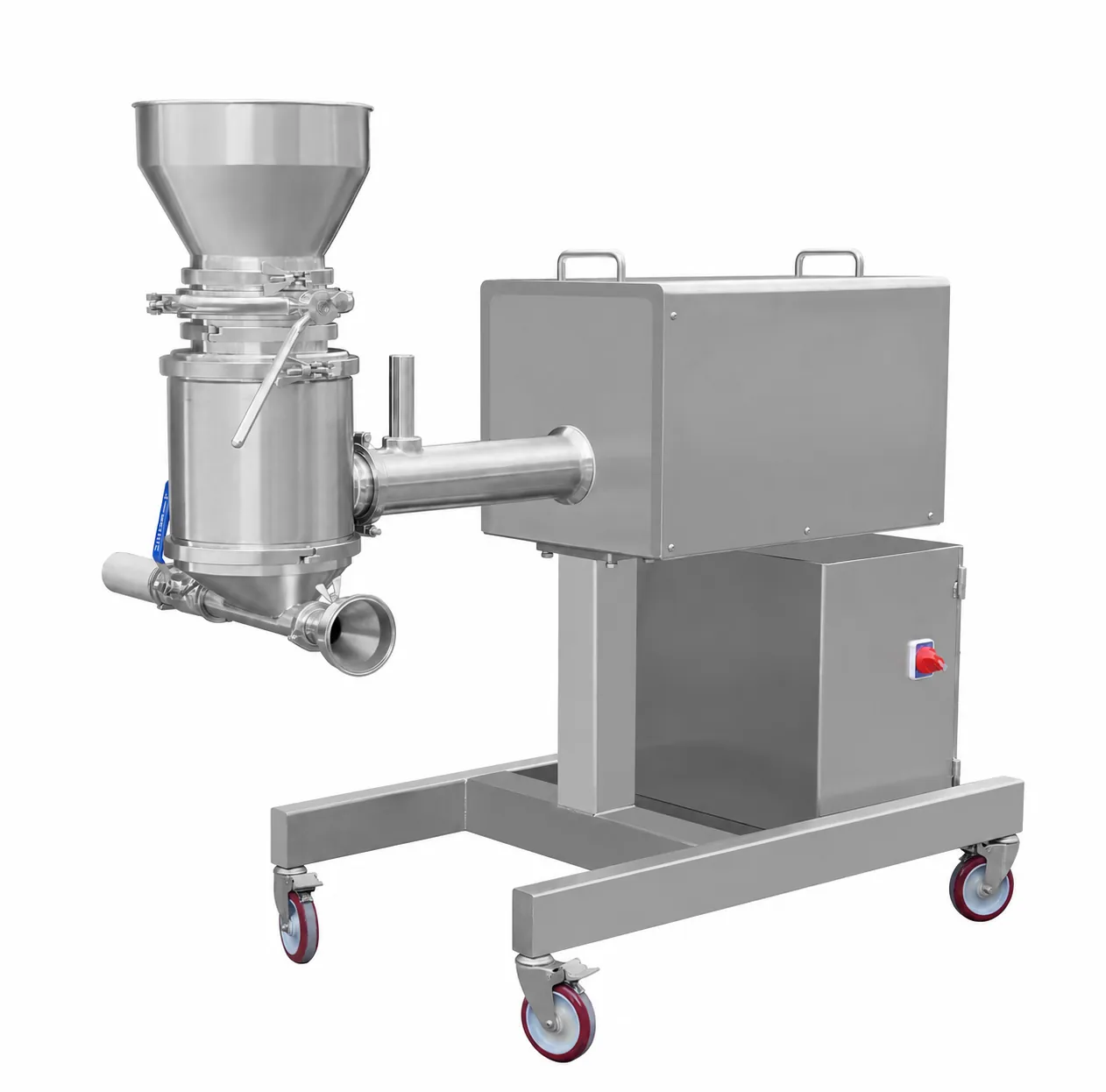
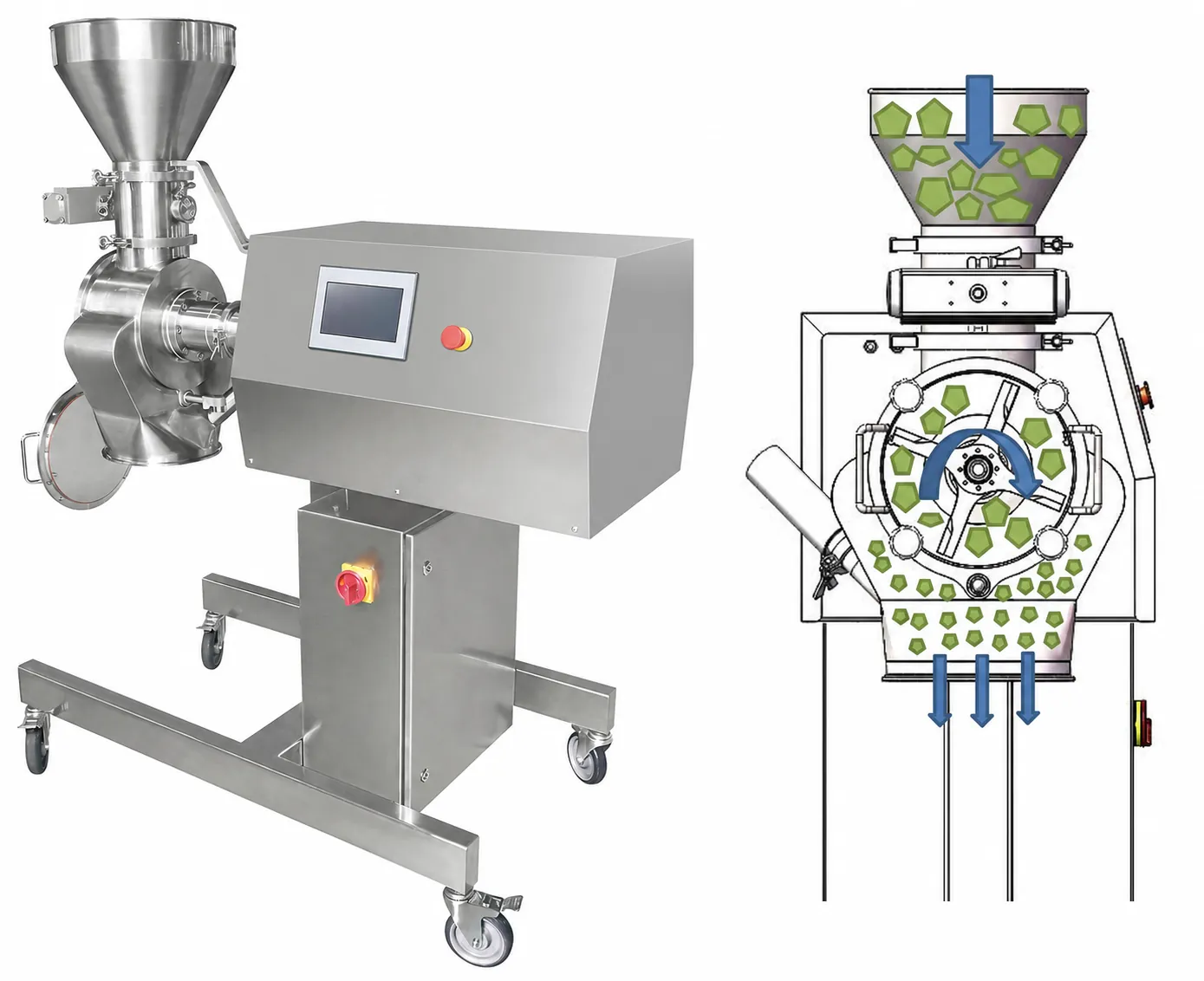
Complete Conical Mill configuration shown for equipment-layout reference. Final inlet, outlet, drive and control arrangement depend on the selected configuration.
Controlled Delumping & Sizing
Conical screen milling for controlled granule sizing and powder delumping.
A conical mill is used for controlled delumping, granule calibration and powder sizing through a conical screen and rotating impeller. It is commonly evaluated for OSD granules, excipients, dry powders and particle size uniformity before downstream processing.
Product Quick Summary
Application
Conical mill
Process type
Controlled screen-based sizing
Key evaluation
screen size, impeller selection, granule condition, moisture and downstream uniformity
Capacity
depending on material characteristics and model selection
Support
material testing, quotation review and documentation support available if required
Process position
Where A Conical Mill Fits In The Process
The conical mill can be used before blending, before granulation, after fluid bed drying or before final transfer to compression, encapsulation or packing.
Step 1
Feed
Step 2
Impeller and screen sizing
Step 3
Discharge
Step 4
Sifting or blending
Step 5
Final feed
Definition
What Is Conical Mill?
A conical mill is a screen-based size reduction machine used to delump powders and size wet or dry granules with controlled milling energy.
A conical mill is used for controlled delumping, granule calibration and powder sizing through a conical screen and rotating impeller. It is commonly evaluated for OSD granules, excipients, dry powders and particle size uniformity before downstream processing.
Final equipment configuration and performance should be confirmed according to material characteristics, process requirements and technical evaluation.
Working principle
How Conical Mill Works
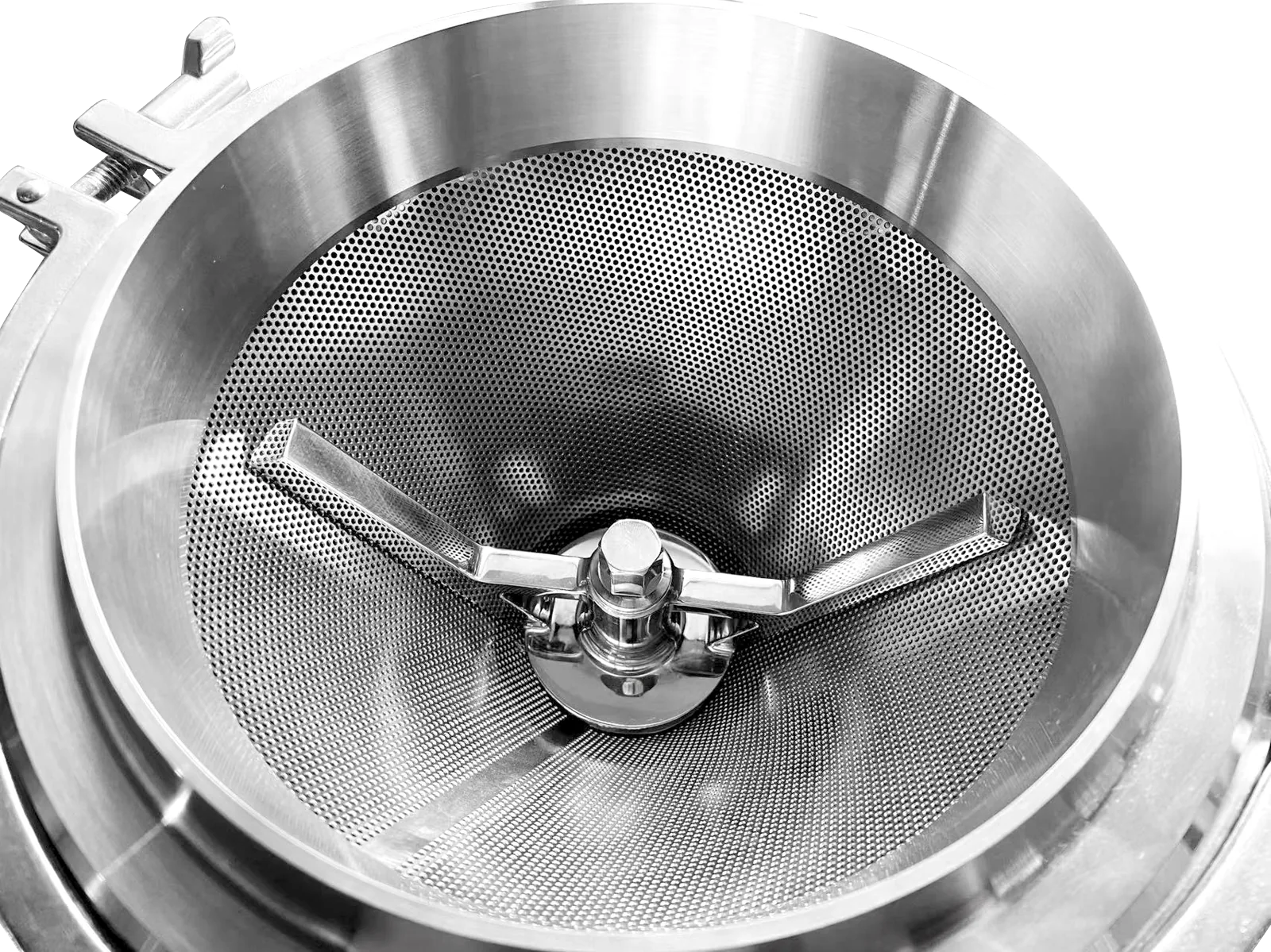
A rotating impeller pushes material across a conical screen. Product is reduced or sized as it passes through the screen openings and discharges to the next process step.
The practical result depends on material behavior, selected model, operating parameters and how the equipment connects with upstream and downstream process steps.
Material enters the conical screen chamber
Impeller moves material across the screen
Oversize lumps or granules are reduced through selected openings
Sized material discharges to downstream handling
Equipment details
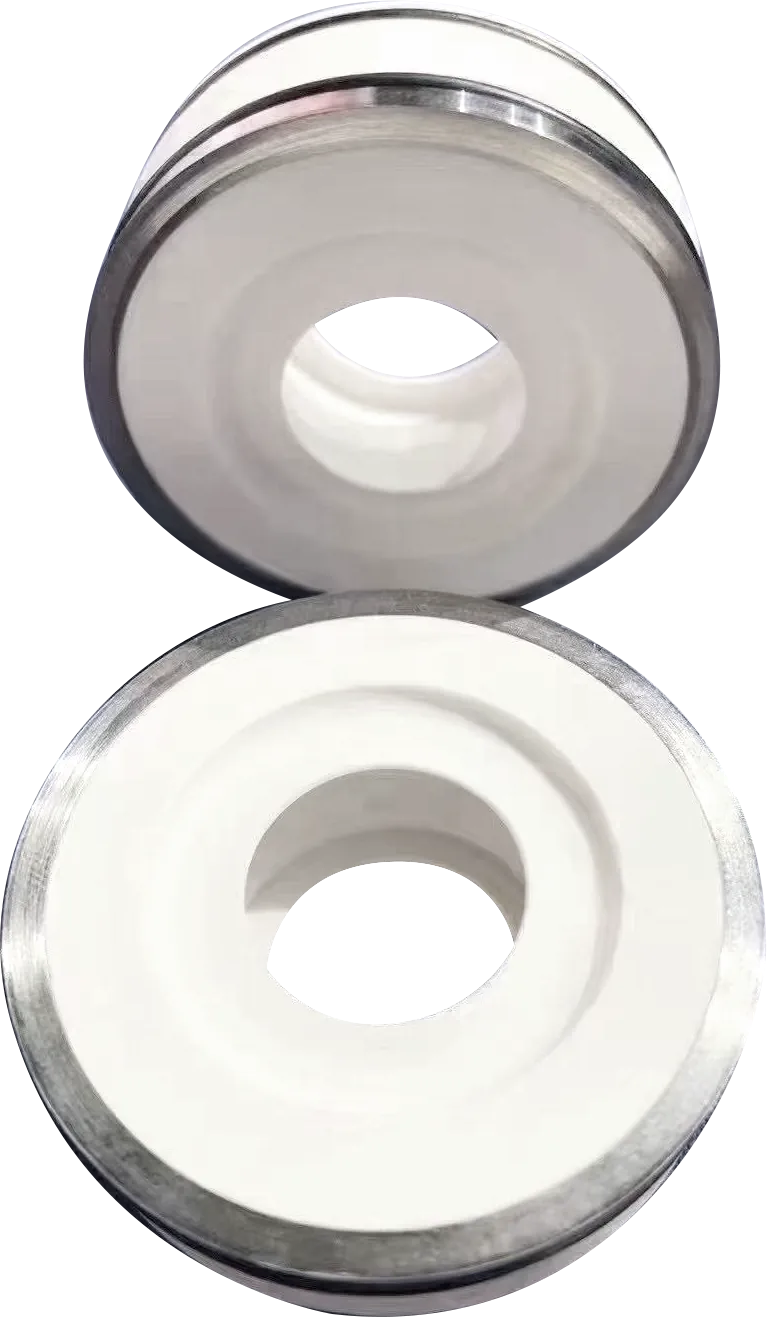
Component Details
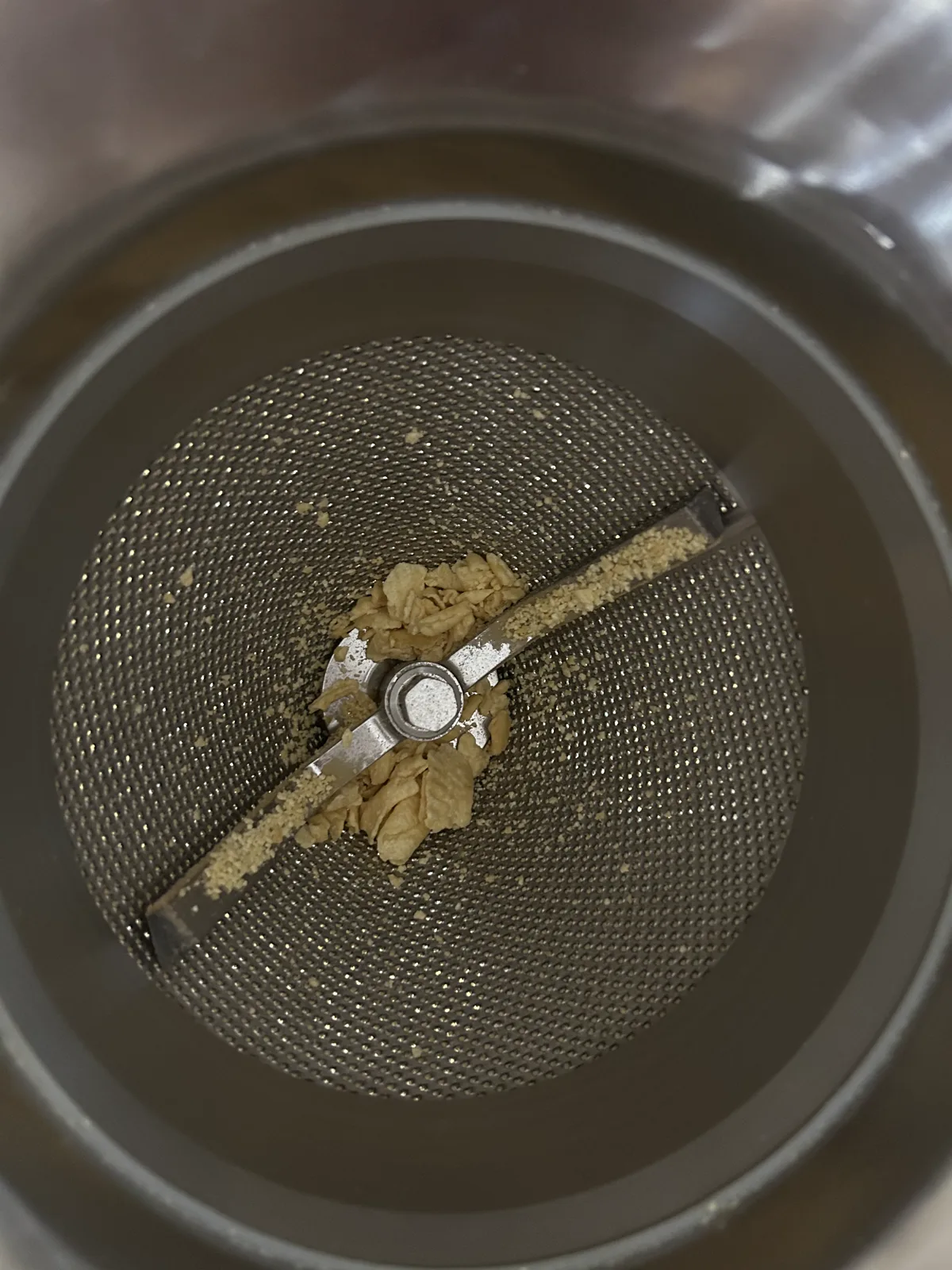
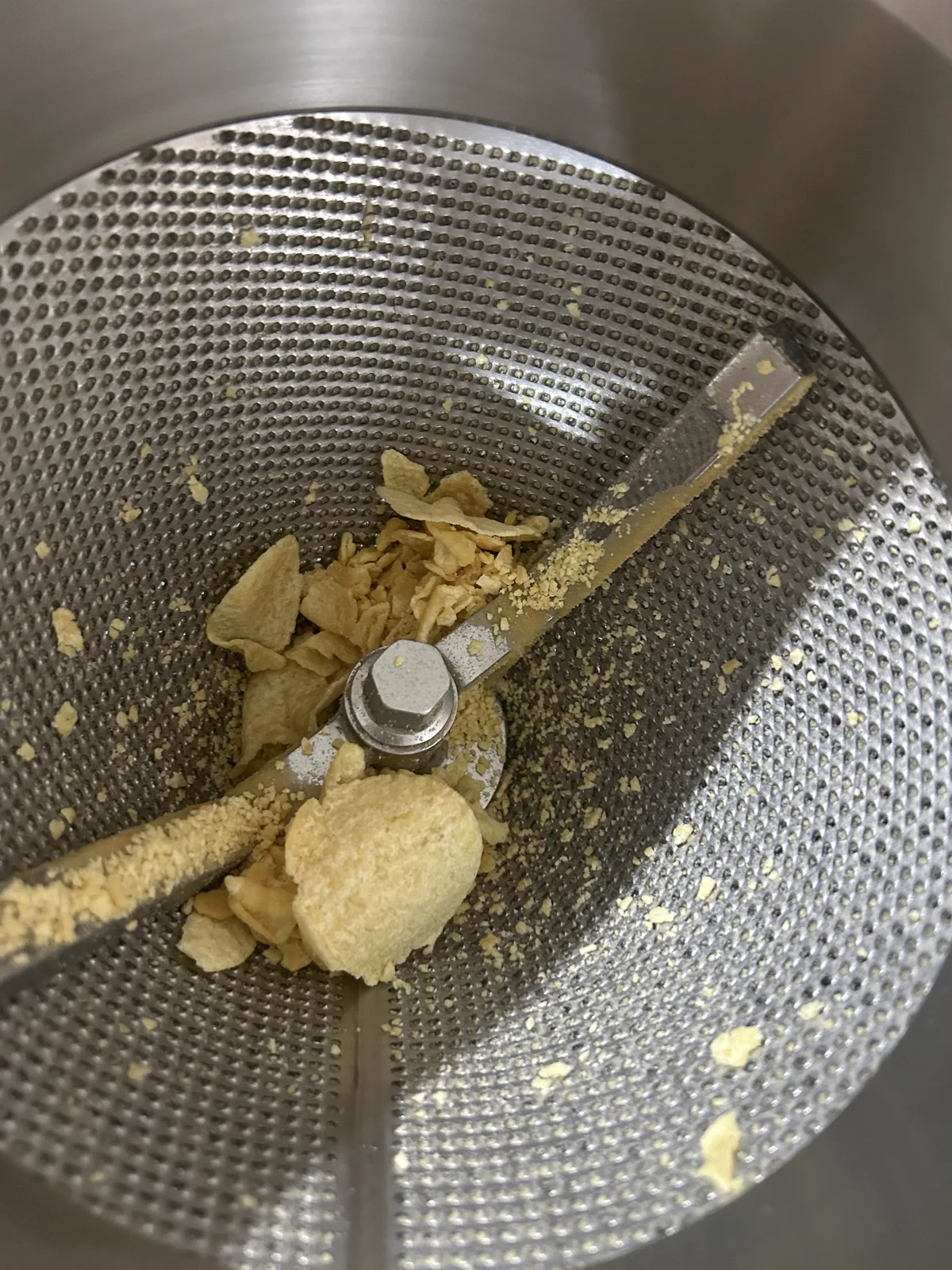
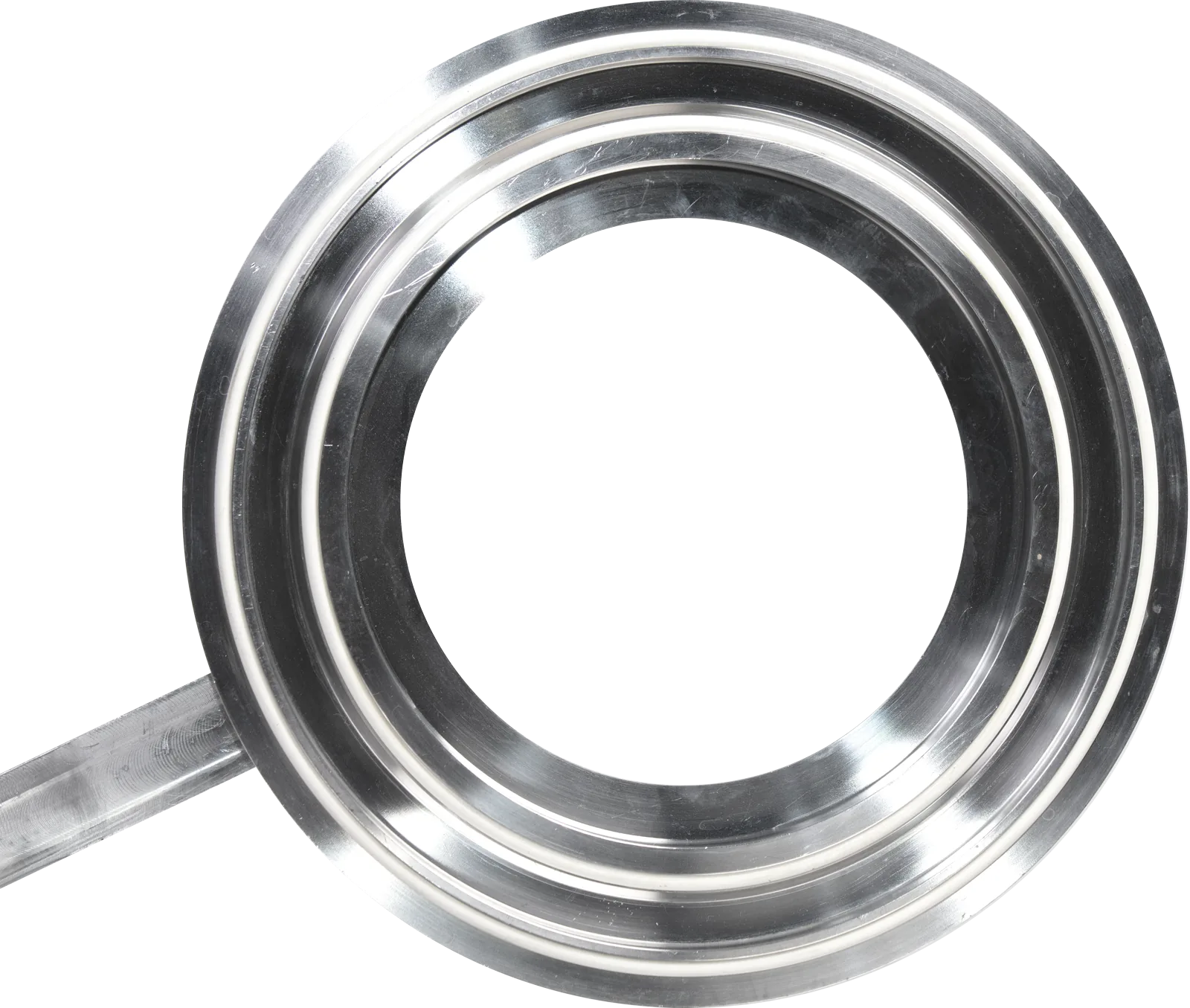
Process diagram
Process Diagram
Applications
Typical Applications
Dry powder delumping before blending
Wet or dry granule sizing in OSD production
Post-dryer particle conditioning
API and excipient preparation before downstream processing
Nutraceutical powder conditioning
Material review
Suitable Materials
Material suitability should be reviewed by formulation, moisture, heat sensitivity, flowability, viscosity, solids content or other process behavior depending on the equipment type.
Dry powders and excipients
Wet granules before drying
Dried granules after fluid bed drying
Sensitive powders requiring gentler sizing
API and nutraceutical materials after URS review
Process output and capacity
Target Particle Size & Capacity
A conical mill is selected when controlled sizing, granule calibration or delumping is more important than aggressive impact reduction.
Catalogue information lists screen openings from 0.5 mm to 10 mm and fine sizing capability around 150 micron depending on product. Final distribution should be confirmed by test or technical evaluation.
Capacity depends on model and material. Catalogue data covers lab to production models, with throughput to be confirmed from density, moisture and target sizing.
- Process objective
- delumping, granule calibration or controlled sizing
- Define whether the product is wet, dry or post-dryer material.
- Size control
- screen and impeller configuration
- Final distribution should be confirmed by testing or technical evaluation.
- Capacity
- depending on material condition and model selection
- Moisture and flowability can affect discharge behavior.
- Downstream step
- blending, compression feed, encapsulation feed or transfer
- Downstream uniformity expectations should be stated.
Equipment value
Key Features
Process role
The conical mill can be used before blending, before granulation, after fluid bed drying or before final transfer to compression, encapsulation or packing.
- Feed
- Impeller and screen sizing
- Discharge
- Sifting or blending
- Final feed
Main benefits
- Gentler sizing compared with more aggressive impact mills
- Screen and impeller changes support process development
- Suitable for dry, wet and sensitive powders after review
- Compact design for process line integration
- Useful in both pilot and production powder handling layouts
Line integration
- Feeding and discharge interfaces can be reviewed according to layout.
- Dust control, collection or wet-process auxiliaries can be configured where required.
- Final scope should be confirmed according to URS, process step and material behavior.
Configuration
Technical Options
Equipment options
- Lab, pilot and production scale models
- Multiple screen openings and impeller profiles
- Top-drive or bottom-drive configuration depending on layout
- Mobile frame, lift-mounted or through-wall arrangement
- Vacuum transfer, IBC discharge or gravity feed integration
Optional configurations
- Top-drive or bottom-drive execution
- Interchangeable screen and impeller sets
- Mobile frame or integrated line mounting
- Vacuum conveying or gravity feed interface
- Controls and safety interlocks according to project scope
GMP-oriented review
Pharmaceutical Design Considerations
Project considerations
- Review wet product stickiness and cleaning access for wet granule applications.
- Confirm containment and dust extraction if the mill is used for API or fine powders.
- Select stainless steel contact parts and cleanable seals according to URS.
- Documentation support and FAT/SAT/IQ/OQ support are available if required.
Safe project wording
- GMP-oriented equipment design can be discussed according to customer URS and project requirements.
- SS316 contact parts are available for pharmaceutical applications.
- Dust control, containment, cleanroom compatibility and cleaning access should be reviewed according to the process step.
- Documentation support is available after order confirmation according to project requirements.
Project delivery support
Cleaning, Documentation & Validation Support
User manuals are supplied with the equipment.
FAT/SAT/IQ/OQ documentation, material certificates and validation-related documents can be provided after order confirmation according to project requirements.
Cleaning access, product-contact scope and changeover expectations should be reviewed before final configuration.
Feeding, dust collection and powder collection systems can be configured according to customer requirements.
Explosion-proof and nitrogen protection options can be discussed according to material and project requirements.
Testing and evaluation
Process Evaluation for Conical Mill Selection
A process review is useful when wet granules, fragile granules or controlled particle size uniformity are important.
Wet or dry condition
Confirm moisture, stickiness and product discharge before final screen and impeller selection.
Granule calibration
Evaluate whether the mill should protect granule structure while reducing oversize material.
Downstream uniformity
Confirm whether product will feed blending, compression, capsule filling or final transfer.
Selection logic
When to Choose Conical Mill
Choose conical mill
Best for: delumping and controlled granule sizing
When to consider: when product needs more controlled treatment than hammer milling.
Use after drying
Best for: post-fluid-bed or post-granulation sizing
When to consider: when dried granules need calibration before blending or compression.
Use before downstream uniformity steps
Best for: particle size consistency
When to consider: when downstream equipment requires stable feed condition.
Alternative selection
Related Equipment / Equipment Comparison
RFQ checklist
What Information Is Needed for Quotation?
A stronger quotation can be prepared when the material, process objective, target output, capacity and documentation expectations are clear.
Material and sizing data
- Material name and industry application.
- Initial particle size and feed condition.
- Target particle size or screen size if known.
- Hardness, brittleness, moisture, oil content and heat sensitivity.
- Material test requirement, including D50 / D90 / D97 discussion if required.
Process and project data
- Required capacity per batch or per hour.
- Upstream feeding method and downstream collection, sieving or transfer step.
- Dust control, containment and cleanroom expectations.
- Contact material requirement, such as SS316 contact parts.
- Destination country, available layout, URS, BOQ and documentation requirement.
Internal links
Related Solutions and Guides
Material Testing & Equipment Selection
Best starting point when target particle size, material behavior, wet-process performance or equipment selection is uncertain.
View detailsMilling, Sieving & Delumping System
Related process system for powder sizing, delumping, control sieving and particle conditioning.
View detailsOSD Powder Processing Line
Related OSD process page for powder feeding, milling, sieving, blending, granulation and downstream handling.
View detailsPharmaceutical Powder Handling System
General pharmaceutical powder handling solution for transfer, containment, processing and line integration.
View detailsCone Mill vs Hammer Mill
Guide for comparing impact milling, controlled delumping and particle sizing requirements.
View detailsHow to Design an OSD Powder Processing Line
Guide for connecting powder processing equipment into an OSD manufacturing process concept.
View detailsWhat Information Is Needed for Powder Handling Quotation?
Checklist for preparing material, process, capacity, documentation and layout information before RFQ.
View detailsFrequently asked questions
FAQ
What is a Conical Mill used for?+
A conical mill is used for controlled delumping, granule calibration and powder sizing through a conical screen and rotating impeller. It is commonly evaluated for OSD granules, excipients, dry powders and particle size uniformity before downstream processing.
What information is needed for quotation?+
Please share material name, process objective, initial condition, target particle size or output requirement, capacity, cleaning expectations, documentation needs, destination country and any URS, layout, BOQ or test objective.
Is material testing recommended?+
Material testing is recommended when particle size, capacity, viscosity, heat sensitivity, flowability, dispersion behavior or process output is uncertain.
Can documentation support be provided?+
User manuals are supplied with the equipment. FAT/SAT/IQ/OQ documentation, material certificates and validation-related documents can be provided after order confirmation according to project requirements.
Can SS316 contact parts be provided?+
SS316 contact parts are available for pharmaceutical applications and should be confirmed together with product-contact scope, cleaning expectations and URS requirements.
Can optional configurations be discussed?+
Yes. Feeding, dust collection, powder collection, control system, cooling, explosion-proof, nitrogen protection or downstream integration options can be discussed according to material and project requirements.
Is a conical mill suitable for OSD granules?+
Yes, it is often reviewed for wet or dry OSD granules, but final suitability depends on moisture, granule strength, screen selection and discharge behavior.
Is a conical mill lower shear than a hammer mill?+
It can be a more controlled sizing choice than high impact hammer milling, but the practical treatment depends on impeller type, speed, screen and material behavior.
RFQ support
Send Material Information for Conical Mill Selection
Share whether the material is wet or dry, the current granule condition, target screen size, capacity and downstream step. Our engineer will review whether conical milling is suitable.